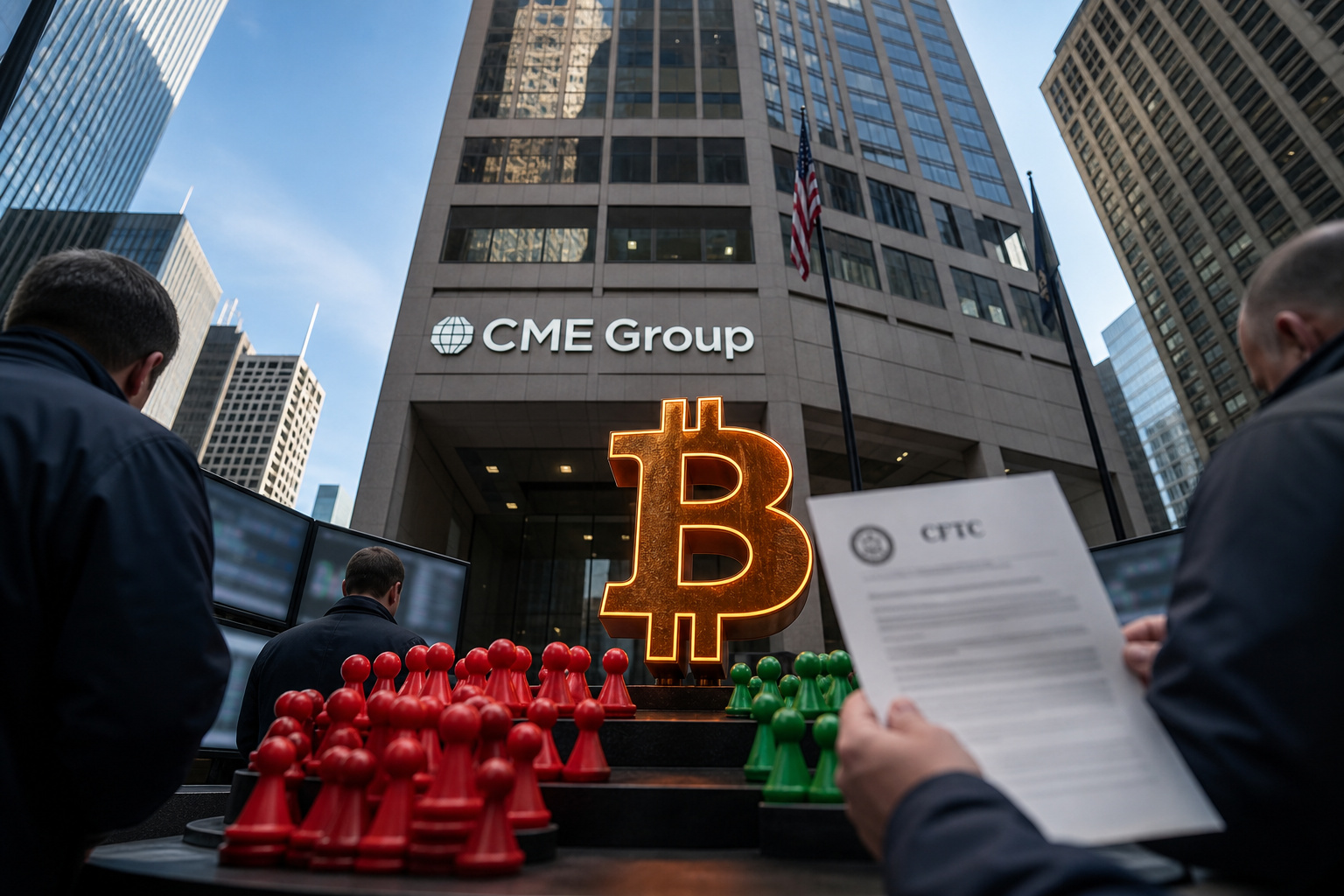
XRP2026-09-01 03:56:54XRP Rises 40% in Two Weeks While Futures Open Interest Falls 16%; CME Adds, Leveraged Funds ShortXRP has climbed about 40% in the past two weeks, from roughly $0.99 to $1.38, according to CoinDesk via ChainCatcher. But futures positioning tells a more mixed story. Total XRP futures open interest contracted 16% to about 2.34 billion tokens, with CoinGlass data showing declines across most exchanges. CME was the exception, lifting its open interest about 36% to 387 million tokens and raising its share of the market from 10% to 17%. CFTC positioning data, as of Aug. 25, shows leveraged funds increased net shorts to roughly 116 million tokens, more than double the prior week's 57 million. Dealers and asset managers took the other side, adding net longs of about 60 million and 28 million tokens, respectively. The shift comes before a procedural Senate vote on the U.S. CLARITY Act, expected around mid-September. The bill fueled a roughly 5% XRP pop when it passed the Senate Banking Committee in May.860
CME2026-08-11 08:22:37CME reportables show only 2,100 BTC net long while leveraged funds stay short 36,200 BTCCryptoQuant founder Ki Young Ju said data from the U.S. Commodity Futures Trading Commission, dated Aug. 4, shows that total reportable traders in CME standard Bitcoin futures were only modestly net long: 420 contracts, or about 2,100 BTC. That amounted to just 2.09% of open interest for the week. The long side was carried by dealers and asset managers, not by hedge-fund-style leveraged traders. The breakdown in the CFTC report shows dealers and intermediaries net long 14,845 BTC, asset managers and institutional investors net long 12,710 BTC, leveraged funds net short 36,200 BTC, and other reportables net long 10,745 BTC. Add them together and the market ends up with only a slim net long position. Ki Young Ju said this matters because the headline figure does not represent hedge funds alone. The article also points to pressure on the basis trade that has historically kept leveraged funds structurally short in Bitcoin futures. CoinDesk data cited in the piece put the annualized three-month futures basis at about 3%, below the 4.19% yield on the U.S. 2-year Treasury as of Aug. 7. The report says that, after counterparty risk and rolling friction, the trade yields roughly 1.2 percentage points less than simply buying Treasuries.1770
CryptoQuant2026-08-11 06:30:56Ki Young Ju revises CME Bitcoin futures read, says leveraged funds are still net shortCryptoQuant founder Ki Young Ju said he has corrected an earlier reading of Chicago Mercantile Exchange (CME) Bitcoin futures positioning after mislabeling the CFTC category "Total Reportables" as "Leveraged Funds." The mistake had led to the conclusion that hedge funds on CME had unusually turned net long BTC futures. In the revised interpretation, leveraged funds remain net short Bitcoin futures. Citing CFTC positioning data as of Aug. 4, Ki said the broader "Total Reportables" group — which includes asset managers, market makers and dealers — was slightly net long overall. He added that, even though the long bias is limited, his earlier view that institutional positioning leaned bullish still holds. He also said leveraged funds have kept their net short exposure in standard BTC futures, though that short has fallen by about 50% over the past year when measured in BTC terms. According to Ki, the decline is mainly tied to weaker basis-trade returns, with arbitrage room narrowing after futures basis yields dropped below U.S. Treasury yields. In Micro BTC futures, leveraged funds are now net long, but only by about +394 BTC, roughly 1% of the net short size in standard BTC futures.1780
CryptoQuant2026-08-11 06:30:01CryptoQuant Founder Corrects CME Futures Positioning Analysis: Leveraged Funds Remain Net Short BTCKi Young Ju, founder of CryptoQuant, walked back his previous CME Bitcoin futures positioning read after mislabeling Total Reportables as Leveraged Funds. CFTC data through Aug. 4 shows leveraged funds still net short BTC futures, though the position has shrunk about 50% in a year. Large institutional traders are slightly net long; Micro BTC net long is just +394 BTC.1940
Metrics Ventu2026-06-28 12:01:07Metrics Ventures Market Insight: Global Fragility Accelerates, Crypto Markets Face MSTR Liquidation Risk and a New BottomMetrics Ventures' latest monthly report highlights that since 2022, persistent global supply chain disruptions have eroded the fiscal and monetary autonomy of economies such as Japan, South Korea, and Europe. Liquidity, outside AI and select commodities, is drying up. Technical indicators show key levels: Japan/Korea stock indices at long-term resistance, the US dollar index breaking a year-long resistance, and a steepening 2-year yield curve. Leveraged fund positions (e.g., SK Hynix surpassing Tesla) set the stage for algorithmic deleveraging if liquidity suddenly contracts, potentially triggering a global panic spiral. In crypto, the risk of MicroStrategy (MSTR) selling its ~800,000 BTC holdings has become a serious consideration, while BTC's role as a short-hedge asset grows increasingly attractive. Precious metals face short-term pressure but may see a pre-bull market 'squat' before a major move. The report urges investors to reassess BTC's positioning and tradable directions in the upcoming risk event, warning that the bottom may be deeper than imagined. Risk and opportunity coexist.440
Bitcoin ETF2026-06-24 00:01:28Rented Conviction: How Much of Bitcoin ETF Flows Is Real Money?On a weekly basis, Bitcoin ETF flows are primarily driven by cash-and-carry arbitrage, not conviction. About half of weekly fluctuations can be explained by new short positions from leveraged funds. However, out of the cumulative $55 billion inflow, only ~$1 billion is net arbitrage; the rest is steady directional buying. The arbitrage trade is unwinding. To interpret flow data correctly, watch the basis and CME short positions.1360
Bitcoin2026-06-23 16:01:54IOSG: How Much of Bitcoin ETF Flows Is Real Money?Weekly Bitcoin ETF inflows are often seen as a thermometer of institutional confidence. However, IOSG's analysis reveals that weekly fluctuations are primarily driven by cash-and-carry arbitrage rather than conviction. While genuine directional buying constitutes the vast majority of cumulative inflows, arbitrage capital has been steadily exiting for two years, warning against misinterpretation of flow signals.1380
Bitcoin2026-06-23 11:02:07IOSG: The Rented Faith – How Much of Bitcoin ETF Flows Is Real Money?Weekly Bitcoin ETF fund flows are often seen as institutional conviction, but they are largely driven by a hidden cash-and-carry arbitrage trade. This article explains how to distinguish arbitrage from genuine demand, the scale of the trade (~$10B out of $55B total inflows), why it is quietly exiting, and how to correctly interpret the data going forward.1380